
Solar · 2026 · Video
Perovskite-silicon tandems
Silicon is close to its practical ceiling. Stacking a perovskite cell on silicon takes more of the spectrum. For a Kerala plant the issue is not the laboratory record. It is humidity, heat, and whether the stack lasts twenty-five years.
An introduction to perovskite tandem solar cells
A tandem cell is two junctions in one stack. Silicon, with a bandgap near 1.1 eV, absorbs red and near-infrared well and blue light poorly. A wide-bandgap perovskite (typically 1.6 to 1.8 eV, a lead-halide crystal) sits on top and takes the short-wavelength light first. What the perovskite does not use is passed to the silicon. The Shockley-Queisser limit for a single silicon junction is about 33.7 percent. A two-junction perovskite-silicon stack has a theoretical ceiling near 43 to 45 percent. Laboratory cells have already gone past 34 percent (LONGi has a certified record in the mid-34s), which is above what a single junction is allowed. Those figures come from the laboratory. A module that will last twenty-five years on laterite is a different question.
Most of the work that will reach a plant is a two-terminal, monolithic tandem: the perovskite is grown on a textured silicon wafer (TOPCon or heterojunction), with a recombination layer between them so the currents match. Four-terminal stacks use two cells and two inverters. They avoid current matching and add wiring and glass. Factories prefer two-terminal because it looks like a silicon line with extra coats. The perovskite film is deposited from solution or by evaporation. The interfaces (self-assembled monolayers, C60, LiF, thin oxides) decide whether the stack holds or whether ions wander and the voltage dies. Encapsulation matters. Damp-heat at 85 °C and 85 percent relative humidity is the test a monsoon climate actually cares about.
The point of a tandem is more kilowatt-hours from the same hectare. A rooftop with a fixed area, a campus with a laterite plot, a floating array with a pontoon budget: all of them buy watts per square metre. Oxford PV has shipped early tandem modules from Brandenburg. Hanwha Qcells, Jinko, Trina and others have shown industrial-size cells. Cheemeni and Perdala are specified as N-Type TOPCon, and that is still the right base case. A tandem overlay on the same tables would raise specific yield if the encapsulant and the contacts survive. Until a hot-humid field file exists, a DPR should run tandems as a sensitivity, not as the plant.
Where land is tight, the advantages are real. More energy from the same structure, the same fence and the same civil work. Silicon stays the bottom cell, so the factory is not a new chemistry from scratch. Two-terminal modules can use the same string inverters a TOPCon plant already knows, if the voltage window is written. Temperature coefficient and low-light behaviour can be kinder than silicon alone, on paper. None of that replaces a warranty that a bank will read.
The limits are why the plant is not tandem yet. Moisture, heat, UV and electric field drive ion migration and phase segregation in the wide-bandgap top cell. The gap between a 1 cm² record and a 60-cell module is still several points. Lead in the best films is small per square metre and politically large. Tin-based and sequestration work exists, at a cost in efficiency. Reverse-bias, hail and thermal cycling have to be passed as a module, not as a cell. IEC 61215 damp-heat (1,000 hours) is a floor. Some laboratory stacks now claim multiples of that with atomic-layer encapsulation. Field years in a Kerala monsoon are not those hours. A twenty-five-year, bankable warranty on the stack is still hard to find.
Research is aimed at the points where the stack fails: buried-interface passivation and mixed self-assembled monolayers for inverted p-i-n top cells; nucleation control so bromide-rich wide-bandgap films do not phase-separate; 2D/3D perovskite caps; better recombination layers on industrial TOPCon and HJT wafers; M10 full-area cells (Qcells and others) so the record is not a postage stamp. Flexible tandems for curved surfaces are still a paper until the dual buffer holds. All-perovskite tandems, which drop silicon, are a second research line. They are not a substitute for a plant that already knows a silicon supply chain. Lead-free and lead-sequestering recipes remain behind the lead films on efficiency.
Before tandems go into a DPR, ask for certified module efficiency (not the cell headline), damp-heat and thermal-cycle reports on the exact bill of materials, lead and end-of-life language, and whether a lender will take a twenty-five-year warranty on a new stack. Until those four sit in the file, TOPCon on laterite is the plant. Tandem stays a sensitivity.
Comments
No public comments yet. A remark is shown here after Studio approves it.
Write a comment.
A remark, a suggestion, or an idea for another piece. This is not a business enquiry. It is held until Studio approves it, then published here. For a plant, a DPR or a job, use Contact.
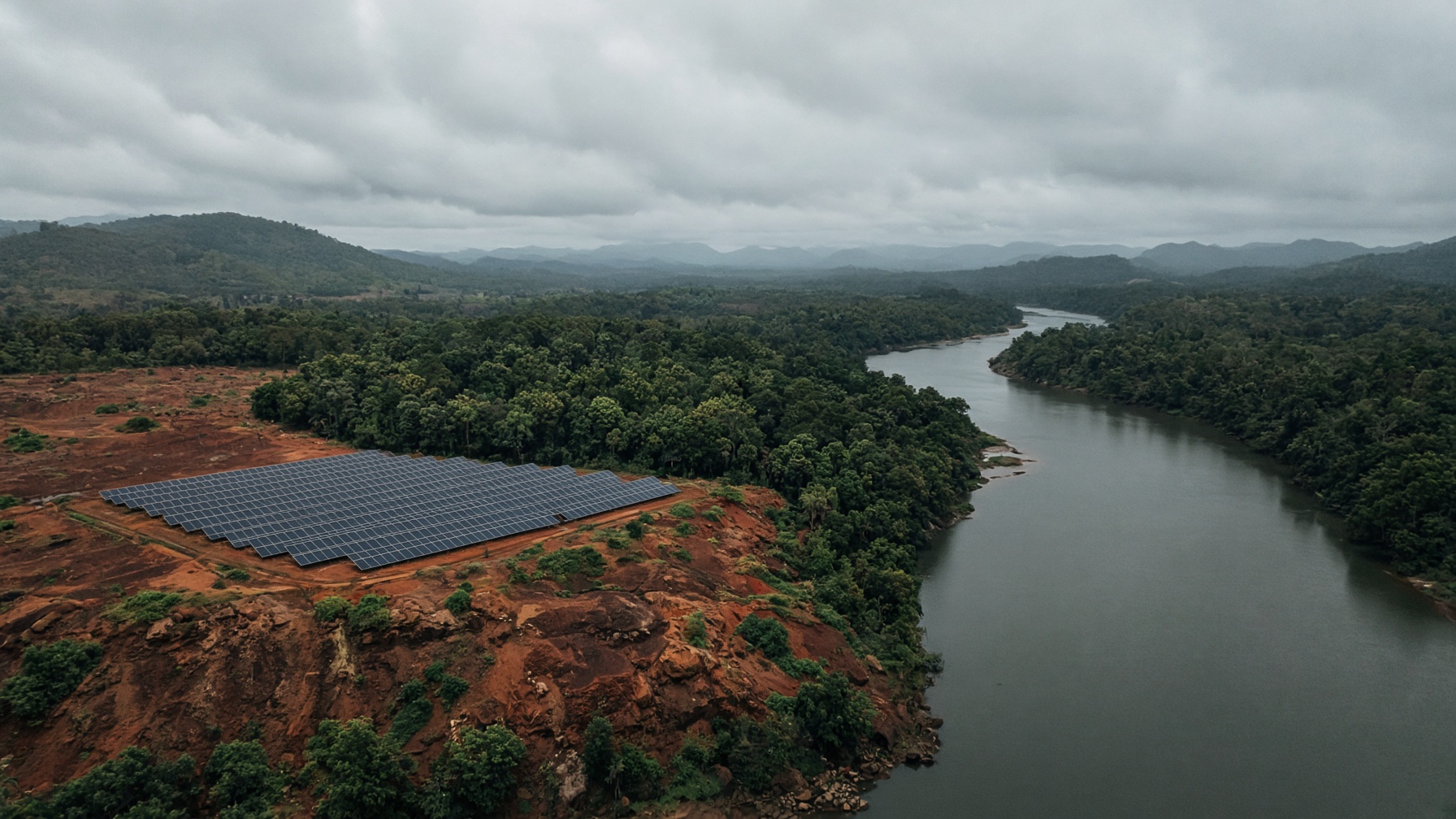
Policy/2026
Growth for all, and ecology as management
Development and ecology have been set against each other for a long time. Small is not always better, and holding other people back is not sustainability. Growth for everyone, planned so it does not wreck the place, is the job.
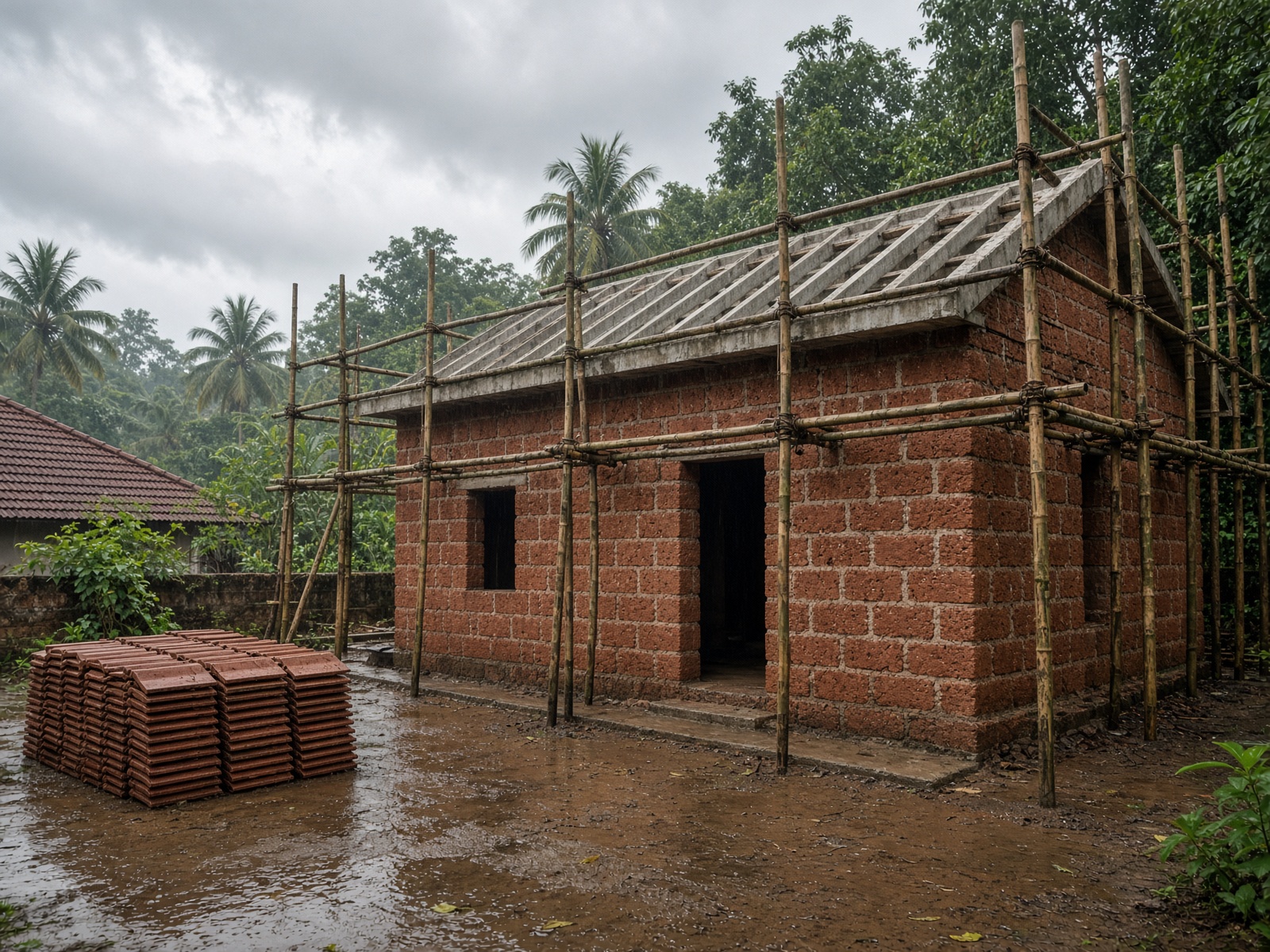
Civil/2026
Cost-effective building, specified clearly
Cheap is not the same as cost-effective. The saving is in the method: the wall, the slab and the skill on site, written in the BOQ, not hoped for after the tender.
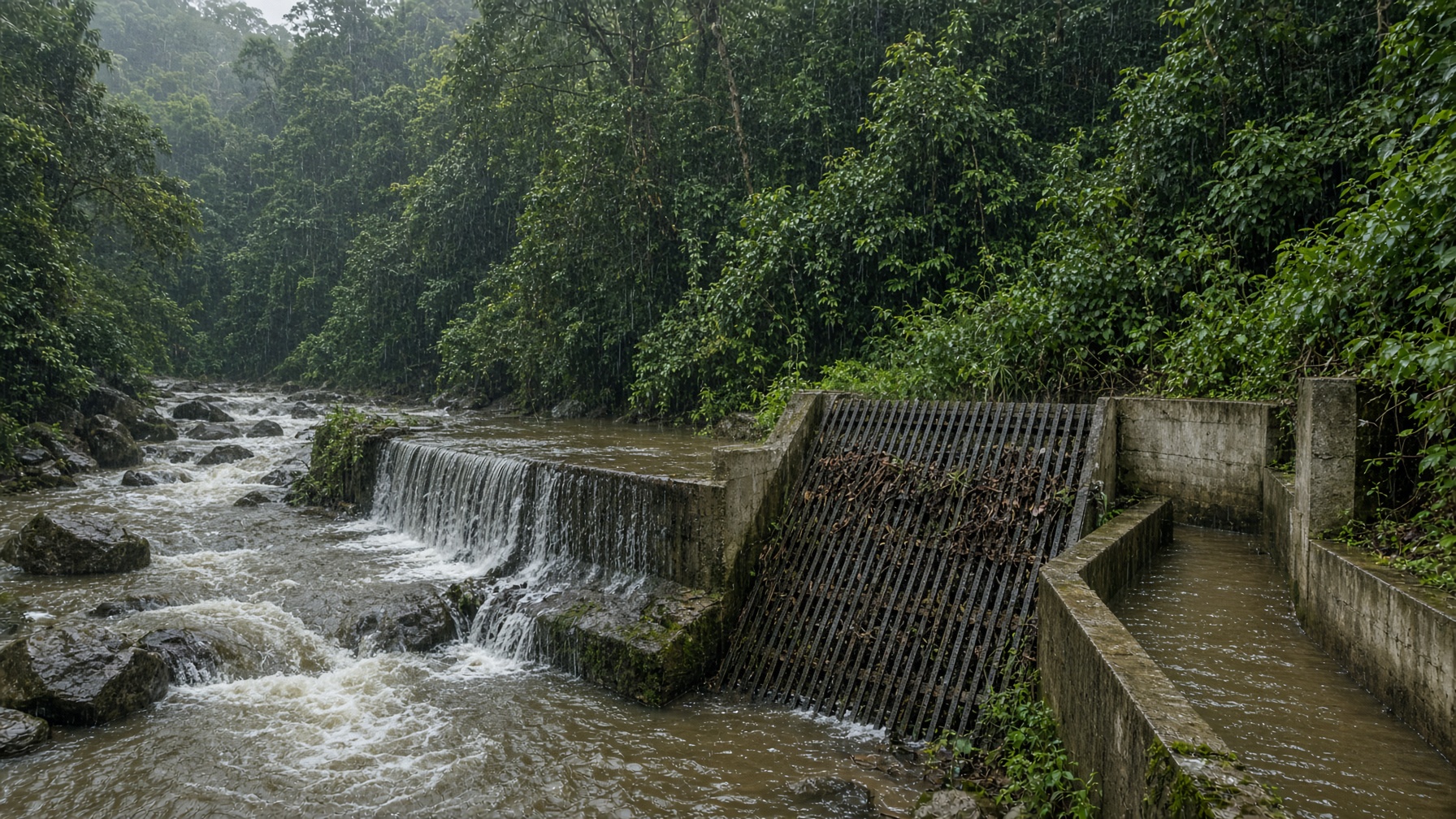
Hydro/2026
Small hydro, rebuilt as a working station
Older stations still earn if the civil, mechanical, and electrical sides are named. New runners, environmental flows, and protection that keep a plant on the grid.
Practice